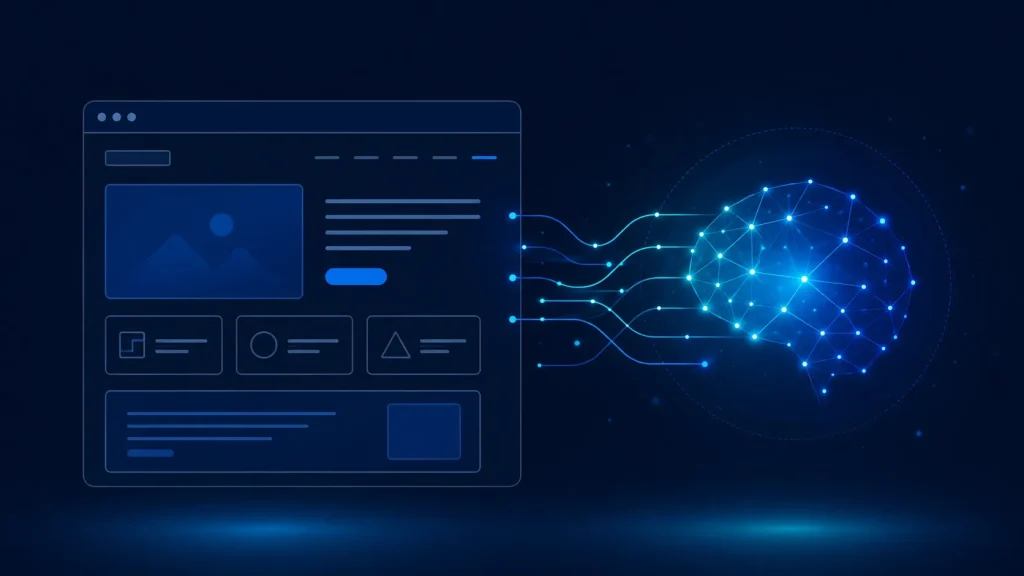
What Makes a Website AI-Ready? A Melbourne Web Designer’s Checklist for 2026
An AI-ready website is one built so that AI search engines like ChatGPT, Gemini and Google’s AI Overviews can read it, understand it, and confidently recommend your business. In practice that means clean structure, fast mobile-friendly design, clear answers to real questions, and consistent business information. It is less about how the site looks and more about how easily a machine can make sense of it.
A few years ago, a good small business website had one job: look professional and load quickly for a human visitor. That job hasn’t gone away. But a second visitor now shows up alongside the human one, and it doesn’t scroll, doesn’t admire your photography, and doesn’t click around. It reads your site in a fraction of a second and decides whether to mention you when someone asks it for a recommendation.
That visitor is AI. And most websites in Melbourne aren’t yet built to be AI-ready websites.
As a web designer, I get asked one question far more than any other now. Not “how do I rank on Google” but “how do I show up when someone asks ChatGPT”. This AI-ready website checklist is the honest answer, written for business owners rather than developers. No jargon, no code, just what actually makes a website AI-ready in 2026.
What “AI-ready” actually means

An AI-ready website is one designed so that an AI engine can read it, understand what you do, and trust you enough to recommend you. That’s the whole idea in one sentence. Everything below is just the practical detail behind it.
Here’s the shift worth understanding. Traditional web design optimised for two things: humans, and Google’s ranking algorithm. AI search adds a third audience, and it behaves differently from both. It doesn’t rank ten blue links and let the user choose. It reads the web, forms a view of your business, and gives one answer. If your site is hard for it to interpret, you’re simply left out of that answer, and you never even know the question was asked.
The good news for small businesses is that this is mostly about clarity, not budget. A well-structured website design built around how machines read content can compete with far bigger companies, because AI is looking for trustworthy, clearly-presented information rather than the biggest marketing spend.
1. Clean structure makes a website AI-ready
The single most important thing that makes a website AI-ready is a clean, logical structure that a machine can follow. AI reads your page through its underlying code, not its visual design, so a site that looks fine to a person but is a tangled mess underneath is hard for a machine to interpret.
In practice, clean structure means a few things. One clear heading that states what the page is about. Sub-headings that break the content into logical sections. Short paragraphs, each covering one idea. Proper use of lists where they make sense. This is the kind of modern website design that reads cleanly for both people and machines, and it’s the foundation everything else sits on.
If your current site was built by dragging blocks around a page builder without much thought to the order underneath, this is usually the first thing worth fixing. A professional web design rebuild often improves AI readability simply by tidying up the structure that was never right to begin with.
2. Fast, mobile-friendly design
A fast, mobile-friendly website matters for AI readiness because speed and mobile usability are signals of a well-built, trustworthy site. Most of your human visitors are already on phones, and the same responsive web design that serves them well also tends to be the cleaner, lighter code that machines prefer.
Two things drag small business sites down here. The first is heavy images, that beautiful full-screen hero photo that takes four seconds to appear on a phone. The second is bloated page builders and unused plugins piling on weight the visitor never sees but always feels. Good mobile-friendly website design keeps things lean, and lean sites are easier to make AI-ready.
You can check your own site’s speed in about thirty seconds using Google’s free PageSpeed Insights tool. If your mobile score is under fifty, that’s costing you real visitors today, quite apart from any AI consideration. Speed isn’t a vanity metric; it’s whether someone waits for your page or bounces back to a competitor.
3. Content that answers real questions
AI-ready content is content that directly answers the questions your customers actually ask. AI engines are built to answer questions, so the websites they pull from are the ones that answer questions clearly and plainly, in the words real people use.
Think about what someone types or says before they buy from a business like yours. How much does it cost? How long does it take? Do you service my area? What’s included? A website that answers these questions directly, ideally in a dedicated FAQ section, gives AI something genuinely useful to work with. Vague marketing language, the “we deliver innovative solutions” kind, gives it nothing.
This is also where web design and content strategy meet. A good SEO and AI search approach starts with mapping the real questions and then designing the page so each answer is easy to find. If you want the deeper version of this, our guide on getting found on ChatGPT and Gemini walks through it step by step.
4. Consistent business information
Consistent business information makes a website AI-ready because AI treats inconsistency as uncertainty, and uncertain information rarely makes it into a recommendation. Your business name, address and phone number need to match exactly across your website, your Google Business Profile, and every directory you’re listed in.
This sounds trivial, and it’s the thing most businesses get wrong. “Street” on one listing and “St” on another. An old phone number lingering on a directory from three years ago. A trading name in one place and the full company name in another. Each little mismatch chips away at how confidently an AI can talk about you.
The fix is unglamorous but genuinely powerful. Pick one exact format for your business details and make everything match it. This is foundational to local SEO too, so you’re fixing two things at once. If you serve the eastern suburbs, that consistency is what helps you show up for people across Lilydale, Croydon, Ringwood and beyond.
5. Structured data (the quiet essential)
Structured data is code that labels the information on your page so machines understand exactly what each part is, and it’s one of the most powerful things that makes a website AI-ready. It tells an AI “this is a business”, “this is the price”, “this is a customer review”, “this is a frequently asked question”, removing the guesswork.
You don’t need to understand the code itself, but it’s worth knowing it exists and asking whether your website has it. Most small business sites don’t. When we audit websites across Melbourne, the vast majority have no structured data at all, which means AI engines are reading them with far less confidence than they could be.
This is the kind of thing a good web designer handles for you behind the scenes. It doesn’t change how your site looks to a visitor, but it changes how clearly a machine understands it, and in the AI era that difference matters.
6. Trust signals AI can verify
Trust signals make a website AI-ready by giving the engine evidence that your business is real, active and worth recommending. Reviews are the biggest of these. Genuine customer reviews on your Google Business Profile carry more weight than almost anything you can say about yourself.
Other trust signals include clear contact details, real photos of your work, an about page that shows the people behind the business, and mentions of your business on other credible sites. Together they paint a picture of a legitimate, established operation rather than a thin site that could belong to anyone.
Design plays a role here too. A professional, current website design signals a business that takes itself seriously. An outdated site from 2018, however good the underlying business, quietly undermines trust with both human visitors and the AI reading on their behalf. If it’s been a while, our post on why every Melbourne business needs an AI-ready website covers the case for a refresh in more detail.
The quick checklist

Here’s the whole AI-ready website checklist distilled into something you can run against your own site today. If you can tick most of these, you’re in good shape. If you can’t, each one is a place to start.
- 1
Clean structure. One clear main heading, logical sub-headings, short single-idea paragraphs.
- 2
Fast and mobile-friendly. Loads quickly on a phone; PageSpeed mobile score above fifty.
- 3
Answers real questions. A genuine FAQ section covering pricing, timing, areas and process.
- 4
Consistent details. Name, address and phone identical everywhere online.
- 5
Structured data. Schema markup labelling your business, services, reviews and FAQs.
- 6
Trust signals. Real reviews, real photos, clear contact details, a current design.
Not sure how AI-ready your website is?
We’re a web design and AI search agency in Lilydale, working with businesses across Melbourne’s eastern suburbs. We’ll check your site against this exact checklist and send you a plain-English report on what’s worth fixing first, with no obligation and no jargon.
Frequently asked questions
What is an AI-ready website?
An AI-ready website is one built so that AI search engines like ChatGPT, Gemini and Google’s AI Overviews can read it, understand what your business does, and recommend it. In practice it has clean structure, fast mobile-friendly design, clear question-based content, consistent business information and structured data. It’s less about visual style and more about how easily a machine can interpret the site.
How is an AI-ready website different from a normal website?
A normal website is designed for two audiences: human visitors and Google’s ranking algorithm. An AI-ready website adds a third audience, the AI engines that now answer questions directly. It behaves differently, reading your site and giving one recommendation rather than a list. The difference in design is mostly in structure, clarity and consistency rather than appearance.
Do I need a new website to be AI-ready?
Not always. Many existing sites can be made more AI-ready by improving structure, adding an FAQ section, fixing inconsistent business details and adding structured data. However, if your current site is slow, built on bloated code or hard to update, a rebuild is often the faster and cheaper path in the long run. A quick audit will tell you which situation you’re in.
Does AI-ready web design cost more than normal web design?
Not necessarily. Good web design already includes clean structure, fast loading and mobile-friendly layouts, which are the same foundations that make a site AI-ready. The extra pieces, like structured data and question-based content, add little cost when built in from the start. It’s far cheaper to build it in than to retrofit it later.
How do I know if my website is AI-ready?
Run it against the checklist in this article: clean structure, fast mobile performance, real question-based content, consistent business details, structured data and trust signals. You can also test directly by asking ChatGPT or Gemini for a recommendation in your industry and area, and seeing whether your business comes up. If it doesn’t, that’s your starting point.
Is mobile-friendly design still important in 2026?
Yes, more than ever. Most human visitors are on phones, and mobile-friendly, responsive web design also tends to be the cleaner, lighter code that AI engines read most easily. A site that’s slow or awkward on mobile loses human visitors and is harder for machines to interpret, so it works against you on both fronts.
What is structured data and do I really need it?
Structured data is code that labels the information on your page so machines know exactly what each part is, such as your business details, prices, reviews and FAQs. You don’t need to understand the code, but your website benefits from having it, because it lets AI engines read your site with far more confidence. Most small business sites don’t have it, which is exactly why adding it is an easy advantage.
Can a small business website compete with bigger companies on AI search?
Yes, and this is genuinely good news for small businesses. AI engines look for clear, trustworthy, well-structured information rather than the biggest marketing budget. A small business with a clean, consistent, well-built website can be recommended ahead of larger competitors who haven’t done this work, and most haven’t yet.
Do you build AI-ready websites in Melbourne?
Yes. We’re a web design and AI search agency based in Lilydale, and we build AI-ready websites for businesses across Melbourne’s eastern suburbs and beyond. Every site we build includes the clean structure, mobile-friendly design, structured data and question-based content that this checklist describes. You can get in touch for a free audit of your current site.

Founder & Director of NextClick Digital, a web design and AI search agency based in Lilydale, Victoria. He works with small and medium businesses across Melbourne’s eastern suburbs on websites, AI automation and search visibility, with a particular focus on trades, healthcare and professional services.